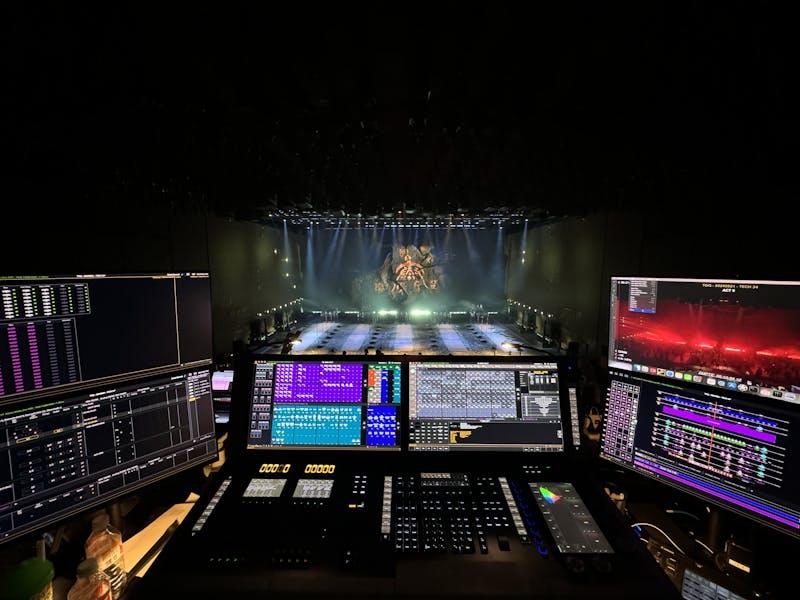
Lighting Programming
I prep the file before load-in, program through tech, and tune the show until it runs the same every night.
- Show file prep & patch
- Palette & group builds
- Magic sheets
- Cue recording & playback
- Preview notes & show tuning
I prep the file before load-in, program through tech, and tune the show until it runs the same every night.
A call with you and the design team: the show, the design intent, the rig and the console, and whether it needs tracking or previz.
The show file is built before we walk in, so tech starts from the designer's looks, not an empty desk.
At the console through tech and previews, turning notes into cues at the speed of the room.
The show stays the show: clean files, clear paperwork and support for whoever runs it next.
The lighting designer decides what the show should look like; the programmer builds it. I sit at the console through tech translating the design into cues — patch, palettes, focus, timing, effects — then tune the show through previews so it plays back identically every night. A good programmer keeps tech moving: while the room talks, the console is already caught up.
ETC Eos family is my primary desk — programming since 2016, professionally since 2019. I also program grandMA3, build previz rigs in Capture and Depence, and handle performer-tracking systems (BlackTrax and zactrack) through my tracking practice, Function Motion Co. (opens in new tab)
As soon as tech dates exist. Broadway and touring productions typically book months out, and the useful work starts well before load-in — show file prep, patch, previz sessions with the designer. A programmer who walks in cold on day one of tech costs you tech time.
I'm based in Jersey City and work worldwide — recent contracts include Doha, Seoul, Shanghai, and national tours across the US. I'm an IATSE member with US and EU work authorization, and I take both union and non-union productions.
Yes — fashion (Saint Laurent, Hermès, Bureau Betak productions), television and film (SNL film unit, Apple TV+), concerts, and large-scale live events. The console changes; the job — a precise, repeatable show — does not.
Day and weekly rates depend on the scope — prep, previz, tech period, and whether the show needs tracking or networking work are all quoted up front, with no surprises after. Get in touch with your dates and venue and I will send availability and a rate the same week.
The lighting designer decides what the show should look like; the programmer builds it. I sit at the console through tech translating the design into cues — patch, palettes, focus, timing, effects — then tune the show through previews so it plays back identically every night. A good programmer keeps tech moving: while the room talks, the console is already caught up.
When I couldn’t find the right tools, I started making them.